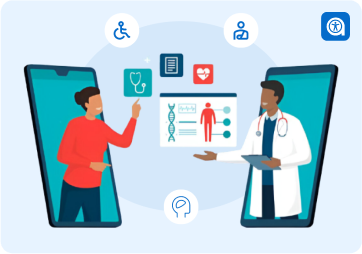
In today’s digital age, where nearly every service is just a click away, the importance of accessibility cannot be overstated. Websites serve as critical gateways to information, services, and resources, especially in the healthcare sector. The significance of accessible websites grows exponentially when considering that 1 in 4 adults in the U.S. lives with a disability. For these individuals, the ability to access healthcare information can mean the difference between timely care and neglect.
Healthcare websites must cater to diverse populations, recognizing that users have varying abilities and needs. The lack of accessibility on these platforms can create substantial barriers, resulting in patients missing out on essential services and information. It is imperative for healthcare providers to understand the importance of web accessibility and to implement it effectively, not just as a legal requirement, but as a moral obligation to ensure equitable access for all.
Embracing Accessibility: The Heart of Inclusive Healthcare
Web accessibility refers to the inclusive practice of making websites usable by people of all abilities and disabilities. At its core, accessibility adheres to four key principles, commonly referred to as the POUR principles: Perceivable, Operable, Understandable, and Robust.

- Perceivable:
- Information and user interface components must be presentable to users in ways they can perceive. For example, providing text alternatives for non-text content allows screen readers to describe images to users who are blind.
- Operable:
- Users must be able to navigate the site and interact with its elements without encountering barriers. This involves making all functionality available from a keyboard and providing users with enough time to read and use content.
- Understandable:
- The content and operation of the user interface must be understandable. This means using clear and simple language, and ensuring that web pages appear and operate in predictable ways.
- Robust:
- Content must be robust enough that it can be reliably interpreted by a wide variety of user agents, including assistive technologies.
Accessibility in healthcare settings is critical. When patients are unable to access crucial information about their health, they are more likely to experience negative outcomes. Recent updates to regulations, like Section 504 of the Rehabilitation Act, have emphasized the importance of accessible healthcare resources, making it essential for healthcare organizations to stay ahead of compliance requirements.
The Regulatory Landscape: Understanding Section 504
Section 504 of the Rehabilitation Act of 1973 is a crucial piece of legislation that prohibits discrimination based on disability in programs and activities that receive federal funding. This law mandates that organizations provide reasonable accommodations to ensure that individuals with disabilities can fully participate in and benefit from their services.
The recent updates to Section 504 are particularly significant for the healthcare sector. These updates require that healthcare websites and mobile applications comply with WCAG 2.1 Level AA standards, reinforcing the need for accessibility in digital spaces. A study found that nearly 80% of the top U.S. hospital websites failed to meet these accessibility standards, indicating a widespread issue that needs immediate attention.
Failure to comply with these regulations not only poses legal risks but can also severely impact patient care. Inaccessible websites can prevent individuals from accessing critical health information, leading to delays in treatment, misunderstandings about medical conditions, and ultimately poorer health outcomes.
The Impact of Inaccessible Websites
Inaccessible healthcare websites can create significant barriers for individuals with disabilities, effectively cutting them off from crucial health information and services.
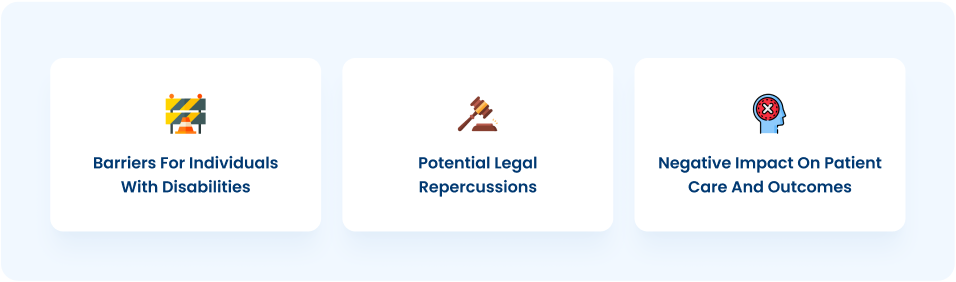
- Barriers for Individuals with Disabilities:
- When users encounter websites that are difficult to navigate or understand, they may face delays in receiving necessary care, potentially leading to deteriorating health conditions. The absence of accessible features, such as text alternatives for images or keyboard navigation, can render vital resources unreachable for many, impacting their overall well-being.
- Potential Legal Repercussions:
- The legal landscape surrounding web accessibility is becoming increasingly stringent. Healthcare organizations that fail to comply with accessibility standards risk facing lawsuits, which have surged in recent years. These legal actions not only lead to financial settlements but also damage an organization’s reputation, undermining patient trust and deterring potential patients from seeking care.
- Negative Impact on Patient Care and Outcomes:
- The negative impact of inaccessible websites extends beyond legal repercussions; it adversely affects patient care and outcomes. When individuals cannot access the information they need, they are more likely to miss appointments, misunderstand their health conditions, or overlook critical health advice. Ultimately, this can result in poorer health outcomes and increased healthcare costs, further underscoring the necessity for accessible digital resources.
Best Practices for Enhancing Accessibility on Healthcare Websites
To improve accessibility on healthcare websites, organizations should adopt several best practices:
- Start with Accessible Components:
- Utilize WCAG-compliant frameworks and semantic HTML from the outset. This approach helps create a user-friendly experience and ensures compatibility with assistive technologies, saving time and avoiding costly retrofitting later.
- Design Forms for All Users:
- Ensure that all forms, whether for registration, appointment scheduling, or feedback submission, are clearly labeled and easy to navigate. Confirm submissions both visually and textually to accommodate users with hearing impairments.
- Simplify Navigation and Content:
- Organize website content with clear headings and logical structures to ease the user experience. Use breadcrumb trails to help patients retrace their steps, and a “skip to content” link to enable screen-reader users to avoid repetitive content.
- Alternative Formats for Multimedia:
- When using images and multimedia content to provide patient education, always include clear alternative text descriptions, synchronized captions, transcripts, and audio descriptions. This ensures that patients with visual or hearing impairments can receive information in a format they can use.
- Personalized User Display Options:
- Allow users to adjust text size, color contrast levels, and fonts. This customization caters to diverse accessibility needs and preferences, helping ensure a more comfortable and user-friendly experience.
- Use Clear, Plain Language:
- Avoid medical jargon where possible and use plain language to describe health information. This approach helps all users, especially those with cognitive disabilities or non-native speakers, better understand complex medical concepts.
- Accessible Downloadable Resources:
- Avoid medical jargon where possible and use plain language to describe health information. This approach helps all users, especially those with cognitive disabilities or non-native speakers, better understand complex medical concepts.
- Maintain an Updated Accessibility Statement:
- Clearly communicate your commitment to accessibility through an accessible statement on your website. This statement should outline available accessibility features and provide users with ways to offer feedback or request assistance.
The Impact of Accessibility on Patient Engagement and Health Outcomes
Improved accessibility fosters better patient engagement, enhances trust, and leads to better health outcomes. When healthcare organizations prioritize accessibility, they send a clear message that they value all patients, regardless of their abilities.
- Engagement:
- Accessible websites allow patients to engage with their healthcare providers effectively. Whether scheduling appointments, accessing test results, or understanding treatment options, the ease of use plays a crucial role in how patients interact with their health.
- Trust:
- When patients can navigate healthcare websites without frustration, they are more likely to trust the organization. This trust is essential for building long-term relationships and encouraging patients to seek care when they need it.
- Health Outcomes:
- Ultimately, improved accessibility leads to better health outcomes. When patients can easily access the information and services they need, they are more likely to adhere to treatment plans, attend appointments, and manage their health effectively.
Paving the Way for an Inclusive Future
Prioritizing accessibility is not merely about avoiding legal repercussions; it is about empowering all patients to take charge of their health. By doing so, healthcare providers can enhance patient engagement, improve health outcomes, and build greater trust among their patients, ultimately paving the way for an inclusive future where everyone has equal access to essential healthcare information.
NavEase is here to support you on this journey. Our powerful web accessibility solution can help you detect and fix accessibility issues swiftly and effectively. Start with a free accessibility website scan to identify potential barriers before they impact patient care.
Leave a Reply